
In a celebration of our domain knowledge in lean manufacturing operations and our German-trained engineering group, ProEx Food is launching our Gesamtnutzung Initiative. This design and execution principle ensures that our customers are achieving the highest levels of utilization and yield possible, across output types.
You may be asking, what does that mean for me? Or how do you pronounce that? Please allow us to explain-
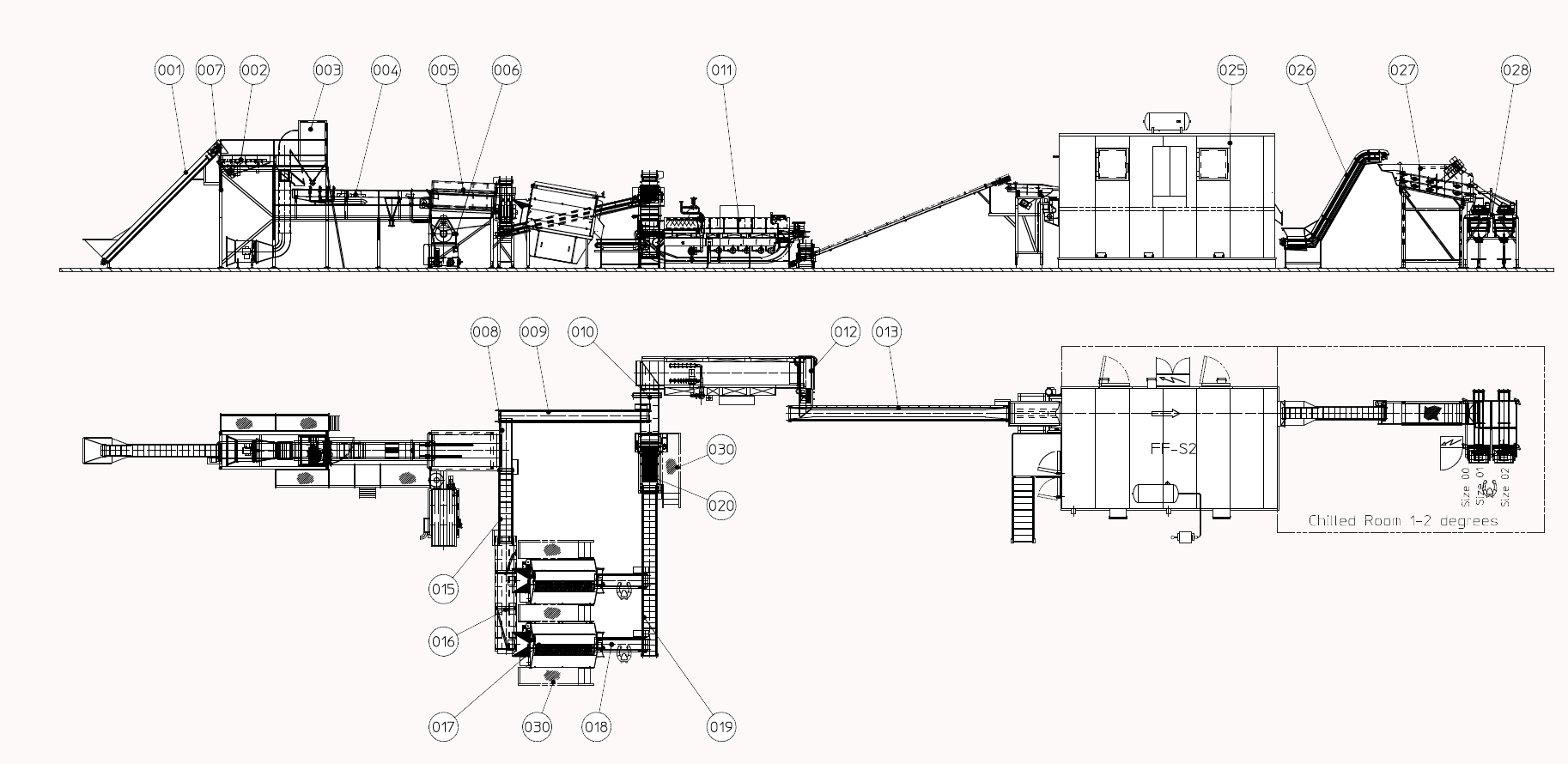
Much of the ProEx Food ethos centers around labor reduction and safety. A significant number of our customers go to great lengths to locate and provide for their labor force. Regardless of the efforts made, for years it has become harder and harder to recruit, train and retain staff. It has also been harder to output product that conforms to increasingly exacting requirements. This isn’t just for large processed goods, but also for growing and scaling fresh market / fresh-cut processors.
That was true well before COVID, and has only accelerated since.
That’s one of the main reasons customers come to us for a processing line. They want to increase production, eliminate a staffing headache, and / or improve product quality. A new contract is coming in, and they need to ramp output up and down rapidly to meet fluctuating demand. These processors also can’t afford to keep a bench of personnel to accommodate – that’s too expensive. Oftentimes, it’s a combination of many of these at once.
But, when you get beyond normal day-to-day operations, the question became: how do we further improve utilization?
Sound familiar?
We started to look at some of the ways we have historically served frozen and shelf-stable (canned) processors, and how that could be integrated into our fresh market / fresh-cut lines. Some of the bigger players in those categories already look at ways to output multiple product SKUs from the same input. An especially nice product goes to the primary one, while others are cut down and the usable pieces are able to be further sliced, chopped, shredded, etc.
Why wasn’t this being used for fresh processors, looking to use every last bit? Why is so much being thrown away? How do we tackle this?

First, we began to modify and improve our shakers, vibratory pans, dewatering systems, graders and similar mechanical equipment to work across more products. We also made updates to our washers and potato / root vegetable peelers to accommodate multi-product lines, giving the latter some options to convert between polishing and peeling.
We then began to take from principles of the multi-product lines we had put together in early 2020. Those lines operate across multiple products, and combine downstream into shared mixing and/or packaging. To reach the objective, we integrate attainable scanning and sorting technologies that identify product that are not capable of becoming ‘ideal’ fresh output, but are still highly viable and safe for other product SKUs. These are sent towards alternate processes, such as frozen and/or shelf-stable lines.
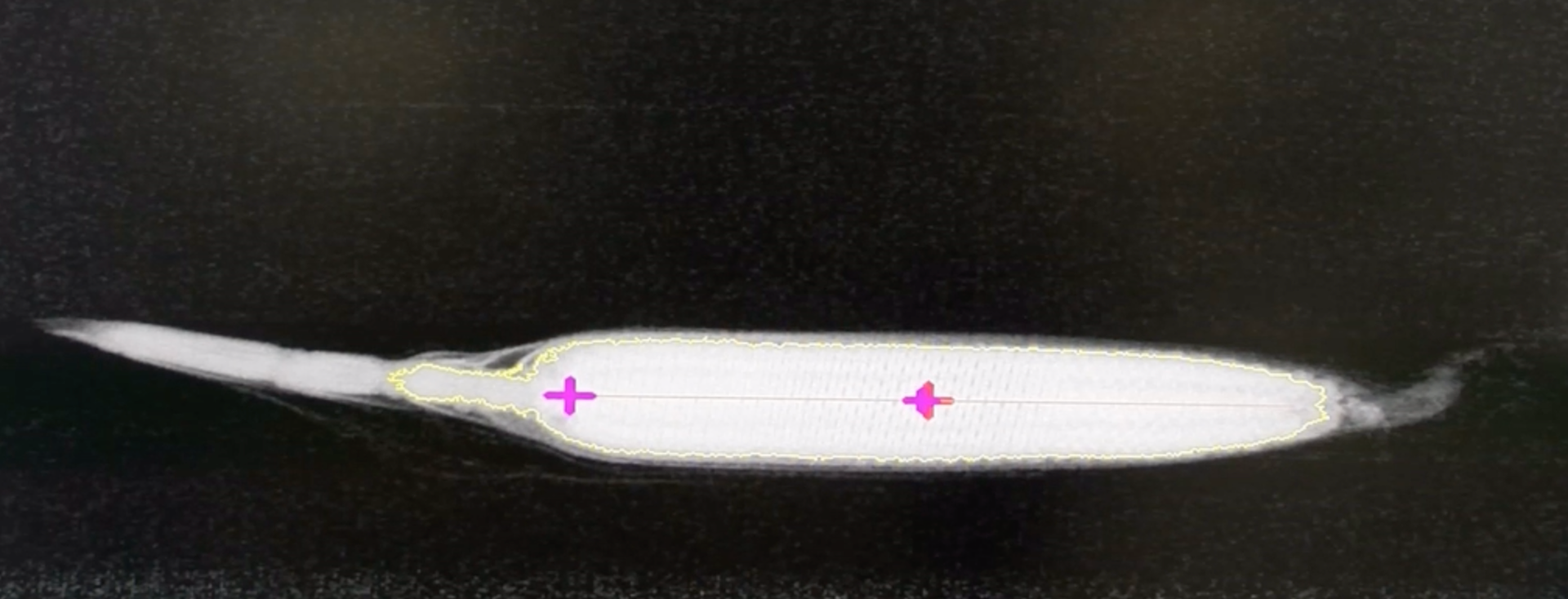
An example is how this works with our highly efficient fresh (tray packed) sweet corn lines. Our scanning system identifies the cobs that have hidden issues. If a portion of each is still safe and usable, we send it to a different processing path. Could be a cobette, could be kernels, etc. This system further enables us to optimize alignment for top and tail trimming, reducing even more waste.
The same principle works on potatoes and other root vegetables, and will soon be available on a wider array of products. Additionally, this method helps eliminate jamming issues on equipment down the line, while reducing your need to stop and sanitize contaminated machinery.
This initiative borrows from our team’s experience in lean manufacturing operations, uses our strong engineering prowess, and delivers ways for you to keep streamlining your facility.
Waste down. And since these are a holistic system, energy consumption is mitigated.
Oh, the pronunciation is: ge zamt nut sung.
Want to discuss this further, click here.